You've noticed it in your analytics, haven't you? A slow, unnerving drop in your click-through rate, even for keywords where you still rank on the first page. This isn't a fluke; it's the new reality of search. Google's AI Overviews are now answering user questions directly, effectively stealing the clicks that once belonged to you. Consequently, the old SEO playbook of simply ranking #1 is no longer enough.
However, this is not a eulogy for SEO. It's a strategic guide to survival and adaptation. While some traffic is inevitably lost, smart marketers can pivot their strategy to not only protect their remaining clicks but also thrive in this new landscape. Therefore, let's break down exactly how to fix your CTR problem.
Part 1: Diagnosing Your Risk and Shifting Your Goal
1. Audit Your "Zero-Click" Vulnerability
First, you need to understand how exposed you are. Some keywords are more susceptible to being fully answered by AI than others. For example, simple informational queries (like "what is a meta description") are prime targets. The first step, therefore, is to audit your most important keywords. Identify which ones now trigger detailed AI Overviews that leave little reason for a user to click further. This allows you to prioritize which pages need an immediate strategic shift.
2. Shift Your Goal from Clicks to Citations
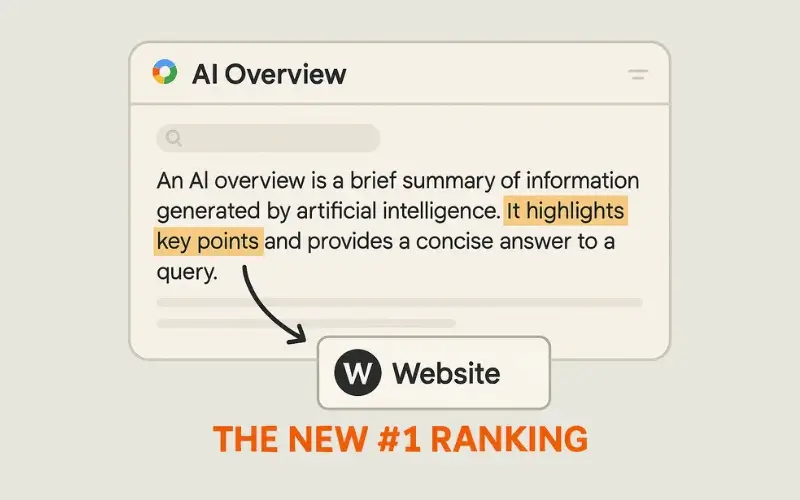
For those highly vulnerable keywords, the primary goal is no longer the click; it's the citation. In other words, your new objective is to have your website featured as a source within the AI Overview. A citation builds brand authority and signals to both users and Google that you are a trusted expert on the topic. Although it doesn't replace a click, it's the new top prize for zero-click search terms.
Part 2: Optimizing Your Content for AI
3. Write Directly for the Answer Engine
To get cited by AI, you must provide the answer as clearly and concisely as possible. AI Overviews are not looking for long, narrative introductions or clever storytelling. Instead, they are scanning for direct answers to the user's query. As a result, you need to write in a way that is easy for a bot to parse. Use short, declarative sentences and put the most important information right at the beginning of the relevant section.
4. Structure Your Content with AEO in Mind
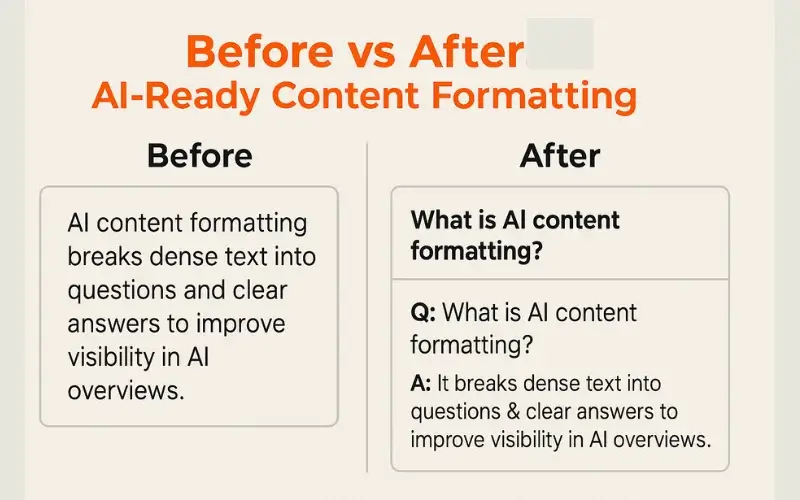
Beyond the writing itself, the structure of your content is critical. AI engines love well-structured data because it helps them understand the context and hierarchy of information. Consequently, you should reformat your content to be highly organized. Use clear, descriptive headings (H2s, H3s), put key information in bulleted or numbered lists, and add a dedicated FAQ section that asks and answers questions directly. This structure makes it incredibly easy for Google's AI to find, lift, and cite your content.
Part 3: Recapturing Traffic and Proving Value
5. Target High-Intent and Complex Keywords
While AI is great at answering simple questions, it is less effective at solving complex, multi-step problems. Herein lies your biggest opportunity. You should shift your content strategy to target more complex, high-intent keywords where users genuinely need a detailed guide, a unique perspective, or a human expert. For instance, instead of "what is SEO," target "how to create an SEO strategy for a small B2B business." Users will still click through for that kind of in-depth content.
6. Double Down on What AI Can't Replicate
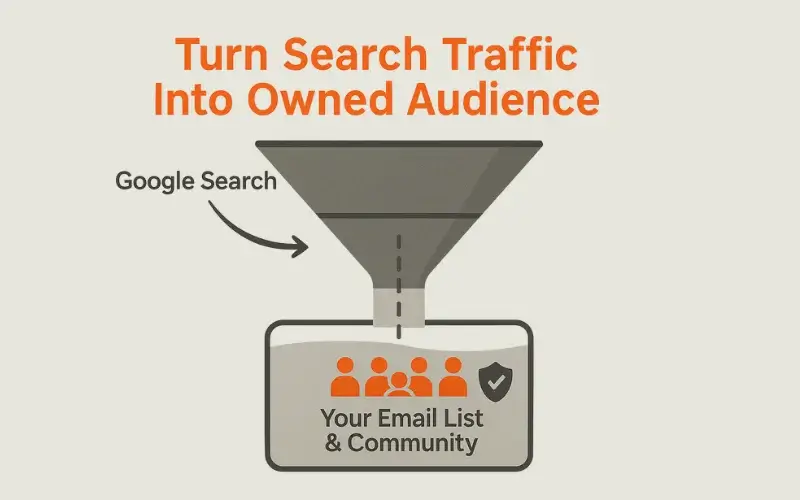
Ultimately, the most powerful way to protect your business is to build assets that Google's AI cannot replicate: a loyal audience and a direct line of communication. While AI can steal your clicks, it can't steal your email list or your community. Therefore, you must double down on these channels. Use your remaining site traffic to drive newsletter sign-ups and promote your social communities aggressively. A direct relationship with your audience is the ultimate defense against any changes to Google's algorithm.
Tips
- Use the FAQPage schema to tell Google what questions your page answers explicitly.
- Update your existing content to be more direct and add FAQ sections.
- Look at the "People also ask" section on Google for ideas on what questions to answer.
- Prioritize building your email list above all other on-site CTAs.
Warnings
- Don't try to "keyword stuff" your content to get into AI Overviews. Clarity beats density.
- Avoid making your content too simplistic. It must still be valuable for the humans who do click.
- Do not assume that being cited in an AI Overview will lead to a huge traffic spike. It often won't.
- Don't abandon traditional SEO; ranking on page one is still a prerequisite for being cited.
Things You'll Need
- Access to Google Search Console to monitor your CTR and keyword performance.
- An SEO tool (like Ahrefs or Semrush) to identify keyword opportunities.
- An email marketing platform to build and nurture your audience.
- A willingness to shift your content strategy from targeting clicks to providing answers.