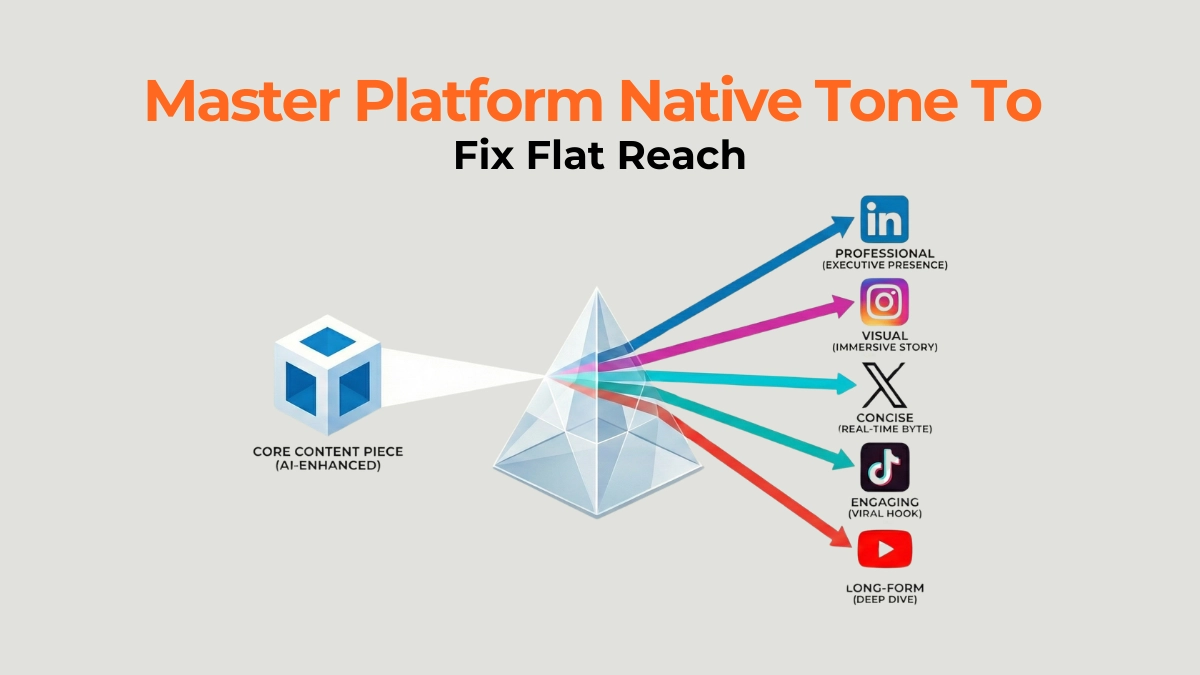
Your content is valuable, but if it sounds the same everywhere, it fails everywhere. Repurposing is not the same as atomizing for a native context. Therefore, the solution is learning the Master Platform Native Tone To Fix Flat Reach. This means tailoring the structure, length, and voice to how users consume content on that specific channel.
Fix Flat Reach Master Platform Native Tone Secrets
The greatest content marketers don't create five pieces; they create one core asset and adapt it intelligently. In fact, what works on LinkedIn (professional, detail-oriented) bombs on TikTok (fast, visual, informal). Consequently, mastering Master Platform Native Tone is the highest-ROI skill for your content team today.
The Core Problem | Content Atomization Failure
First, most teams copy-paste. They take the webinar summary and post it verbatim across all platforms. However, this treats every platform as a simple broadcast channel. Consequently, platforms penalize this low-effort approach with reduced reach because it offers no native value to their users.
Phase One | Deconstruct The Core Message
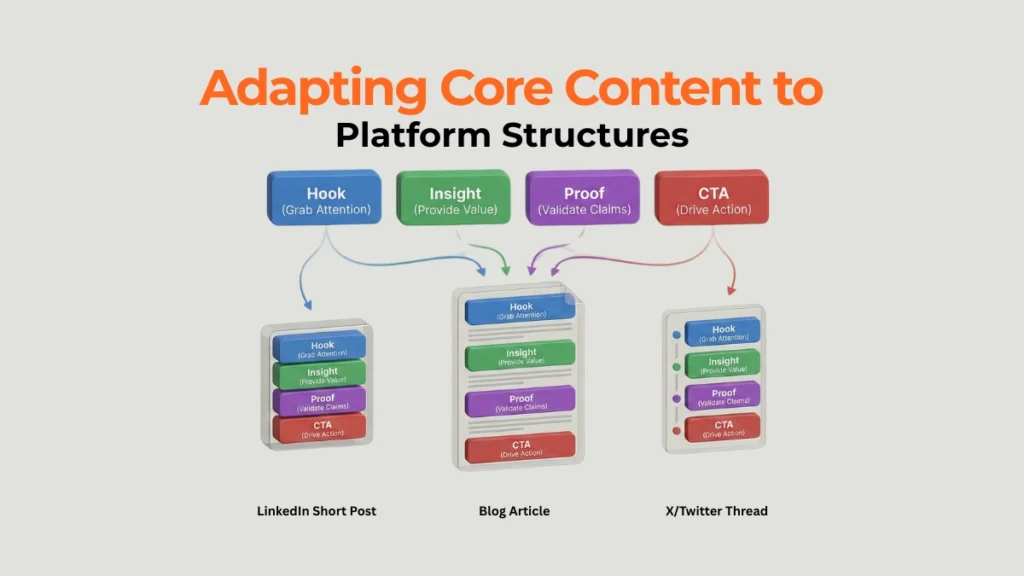
Next, distill your core asset down to its essential components: The Hook, The Core Insight, The Proof Point, and the CTA. You need three distinct versions of each component ready for adaptation. This disciplined approach is the start of any successful Master Platform Native Tone system.
Phase Two | Platform-Specific Tone Mapping
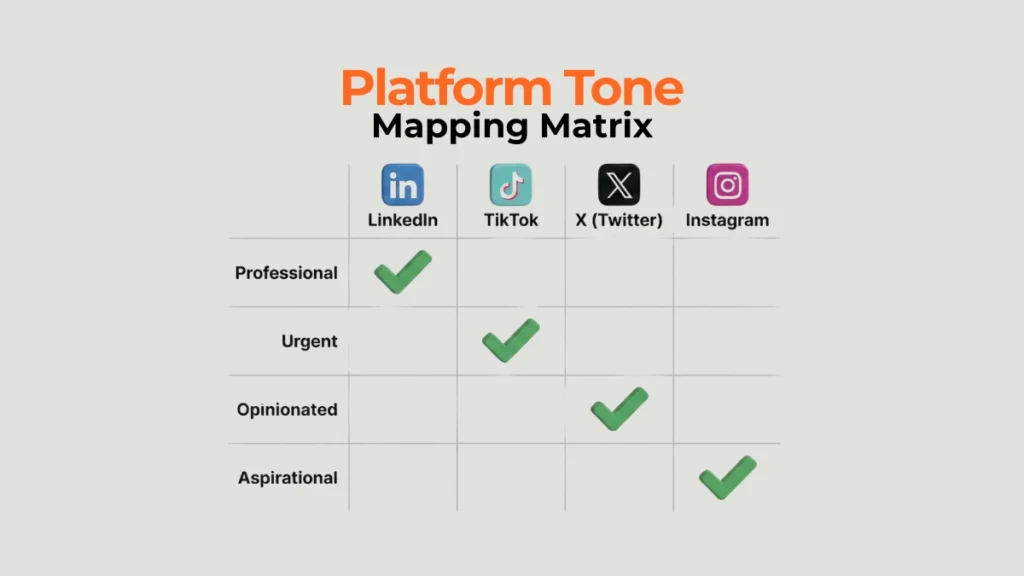
This is the most crucial step. Create a simple matrix defining the required tone for each channel. For example: LinkedIn = Professional, Third-Person, Solution-Oriented. TikTok/Reel = Urgent, First-Person, Visually-Driven. X (Twitter) = Opinionated, Concise, Threaded. Instagram = Aspirational, Visually Led, Brief Caption.
Phase Three | Applying Native Interaction Triggers
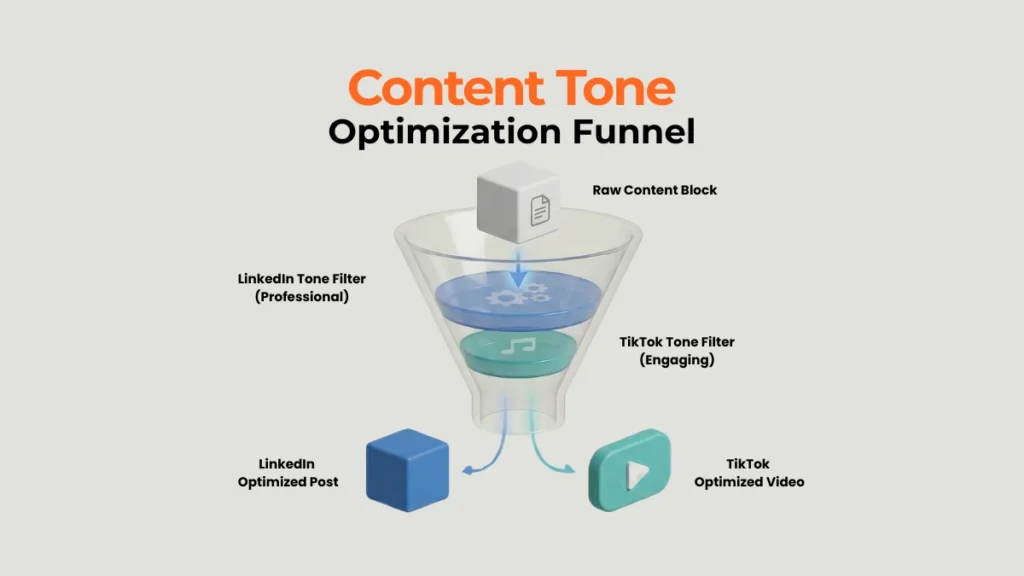
Your content must trigger the platform's native interaction. On X, this means using compelling thread hooks, and on Instagram, it means asking a polarizing question in the caption. On LinkedIn, it means using a strong personal story. Therefore, the content is the same, but the delivery trigger changes based on the Master Platform Native Tone.
Scaling Your Tone Consistency
To ensure consistency across your team, document these rules in a simple "Tone Guide." This ensures every post, regardless of the author, sounds like your brand on that specific channel. Furthermore, measure engagement per platform (not just total views) to validate your tone mastery efforts.
Hire Native Execution Experts From BitBop
Struggling to manage content velocity across platforms? Hire a dedicated Social Media Manager from BitBop to own your cross-platform native execution. Visit: Hire A Social Media Manager today.
Frequently Asked Questions (FAQ)
Are AI tools required for this?
AI tools are excellent for suggesting platform-specific length and keyword variation, but the core tonal shift must be guided by human strategy.
How quickly can I see the results?
You should see engagement lift (likes, comments, shares) on newly adapted content within 7-10 days, as platform algorithms favor native interaction.
Does this replace keyword research?
No, keywords are universal, but the way you present them (the tone) must change dramatically per platform.
Tips
- Create a "Swipe File" of competitor posts that excel on each platform for tone reference.
- When atomizing, always cut the word count by 40% for the shortest channels (X/TikTok).
- Test the same message delivered in a "formal" vs. "informal" style on LinkedIn to see which tone your audience prefers.
Warnings
- Never use an external platform's native AI to generate content for another platform (e.g., asking Gemini for an Instagram caption).
- Do not sacrifice the core brand message for tone; the core idea must remain intact.
- Avoid making your tone change so drastically that your brand feels inauthentic across channels.
Things You'll Need
- A documented, simple style guide for each key social channel.
- Analytics access that separates engagement metrics by platform.
- A mandate from leadership to prioritize quality adaptation over quantity posting.