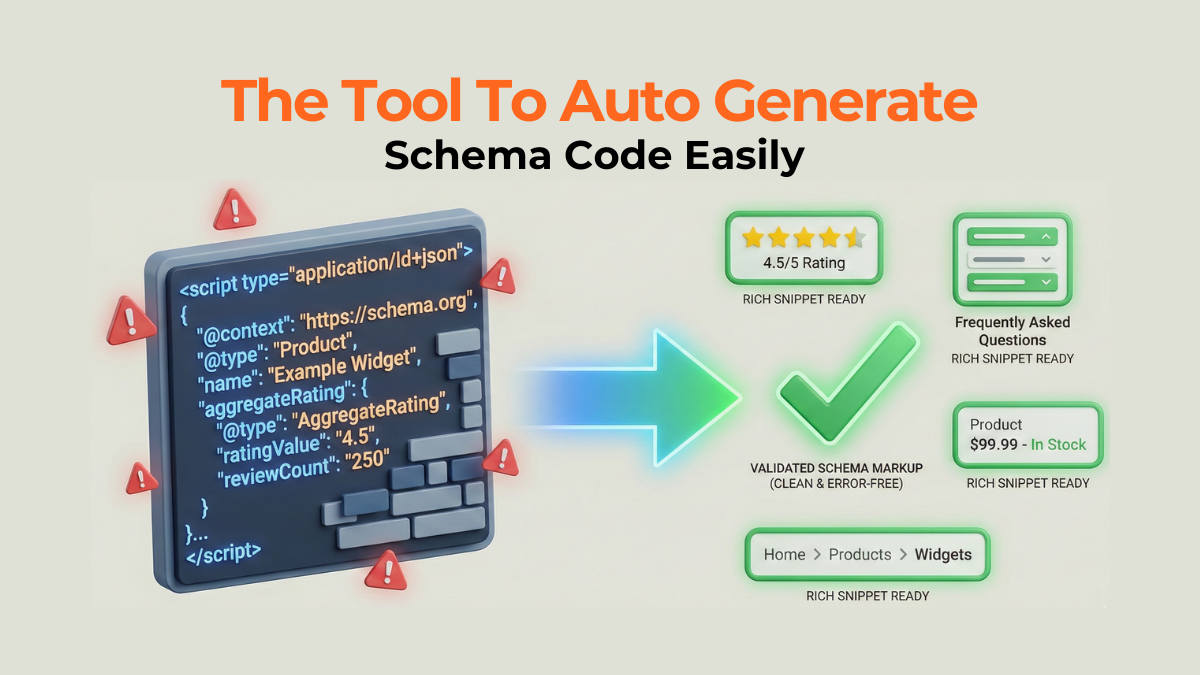
Writing structured data manually is slow, error-prone, and bottlenecks your SEO timeline. Every minute spent debugging JSON-LD is time lost ranking higher or securing a Rich Snippet. Therefore, the key to modern SEO speed is learning Auto Generate Schema Code Easily. This unlocks faster implementation for better AI visibility.
Unlock AI SEO Auto Generate Schema Code System
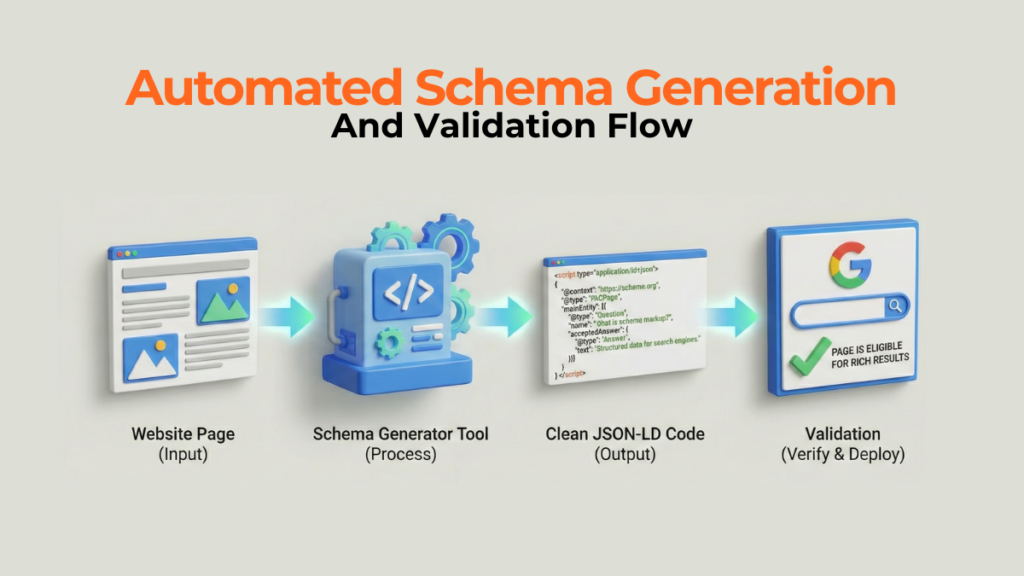
The future of fast SEO requires automating repetitive, technical tasks like coding schema. In fact, tools now exist to scan your existing content structure and scaffold the correct markup instantly. Consequently, mastering how to Auto Generate Schema Code lets you focus on content authority, not syntax errors.
The Core Problem | Manual Schema Bottlenecks
First, manual coding for complex schemas (like Recipe, Product, or FAQ) is a time sink, often requiring developer assistance. Furthermore, a single misplaced comma breaks the entire block, causing validation failures and losing you visibility. Therefore, high-volume sites cannot scale without automation.

Phase One | Identifying Schema Candidates
Next, identify which pages need schema most urgently. Prioritize pages that answer clear questions (FAQs), list products, or contain dates/events. These are the components of Google’s AI Overviews, and traditional Rich Snippets actively seek. You must know what you want to mark up before you try to Auto Generate Schema Code.
Phase Two | Selecting Your Auto-Generation Tool
This is where life is easier. You need a tool that works as a browser extension or a CMS plugin to scan the page's context. Look for solutions that offer a clear preview and validation check before deployment. Tools like [Mentioning a category like 'Schema Plugins for WordPress'] or [Mentioning a browser extension type] automate this painful process significantly.
Phase Three | Review Validation Not Just Generation
Crucially, generation is not the final step. After the tool helps you Auto Generate Schema Code, you must run the output through Google's Rich Results Test or Schema Markup Validator. Automation speeds up the process, but human review confirms accuracy, preventing misrepresentation to search engines.
Scaling Your Structured Data Implementation
To truly Auto Generate Schema Code at scale, integrate the chosen solution directly into your CMS workflow. For instance, if using a plugin, train your junior writers on the basic inputs required. This democratizes structured data implementation across your entire content team, massively increasing your site-wide markup coverage safely.
Frequently Asked Questions (FAQ)
Are AI tools required for this?
No, specialized schema tools are often better than general AI for this, as they are purpose-built for specific markup validation.
How quickly can I see the results?
Schema markup visibility is often faster than traditional content ranking, sometimes appearing in Rich Results within a week if implemented correctly.
Does this replace keyword research?
No, this optimizes how Google reads your existing content; it doesn't create the content itself.
Tips
- Start by applying the schema only to your top 10 FAQ pages to test the process.
- Always prioritize the FAQ schema or the HowTo schema if your content matches those formats.
- Use tools to check your competitors' schema markup to see what they are successfully implementing.
Warnings
- Do not implement schema for content that doesn't accurately reflect the page; Google penalizes deceptive markup.
- Never deploy a schema without running it through Google's official validator first.
- Ensure your chosen tool supports the latest Schema.org vocabulary version.
Things You'll Need
- Access to a trusted Schema generation tool (plugin or extension).
- Access to Google Search Console and the Rich Results Test tool.
- An understanding of the specific Schema type your page requires (FAQ, Product, Article, etc.).