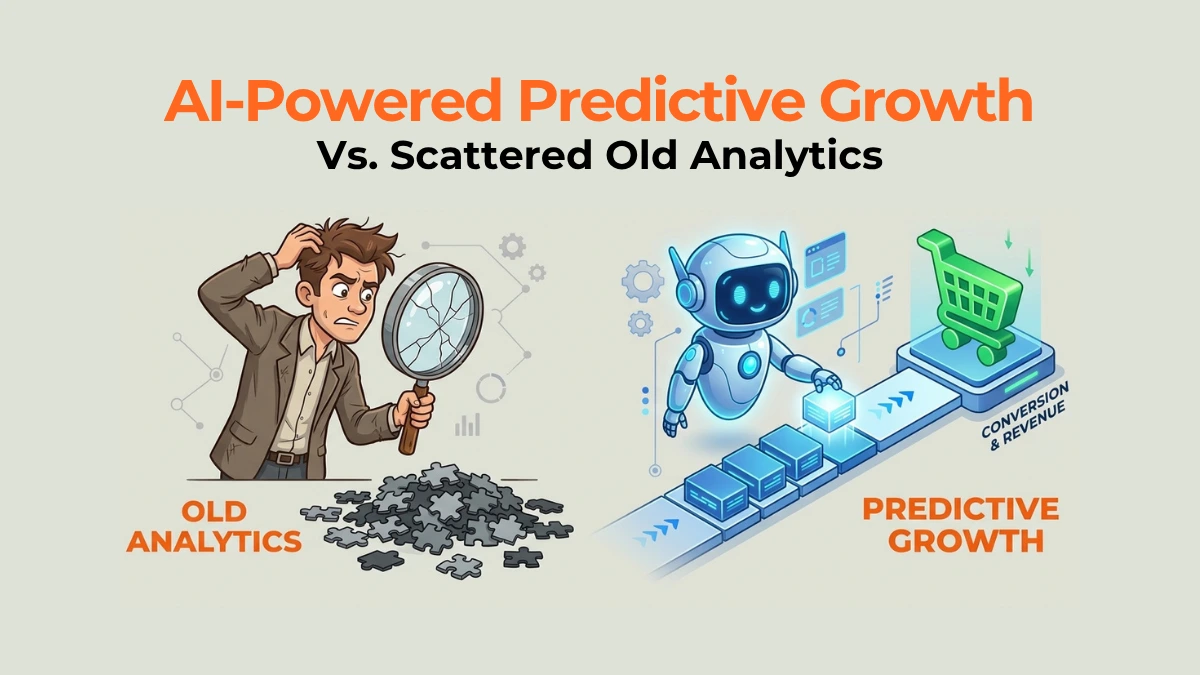
Are your customer acquisition costs skyrocketing? You are not alone. The era of silent tracking is over, and standard algorithms are now blind. The solution is building a predictive marketing analytics strategy. This guide shows you how to stop looking in the rearview mirror and start using AI to automate your revenue.
The Problem: Silent Tracking Fails in 2026
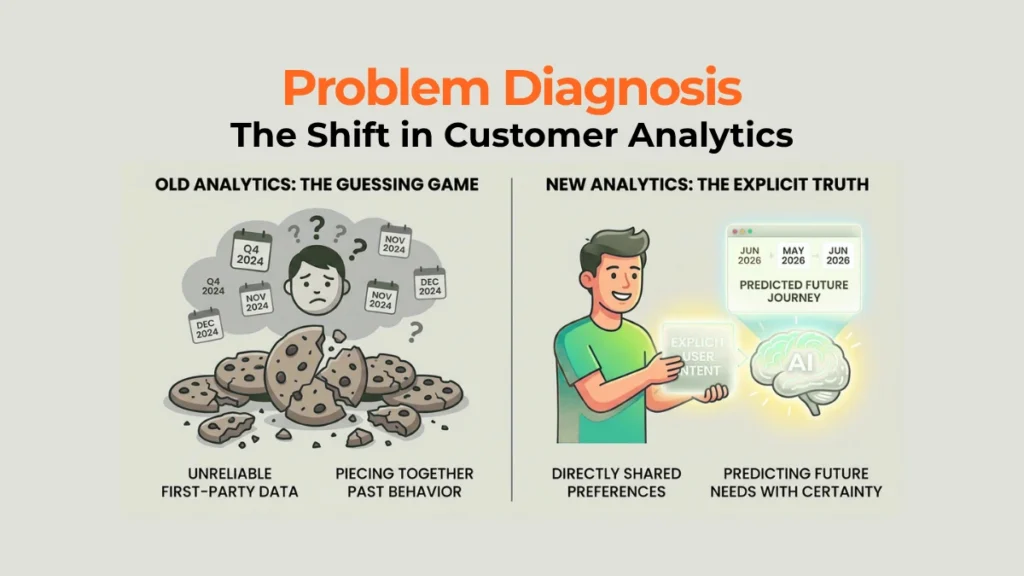
Your old tracking pixels and third-party cookies aren't working. Privacy updates have fundamentally broken the old marketing playbook. Consequently, marketers are forced to guess customer intent based on fragmented, historical data. This means wasted ad spend, irrelevant emails, and a rapidly declining ROI.
The Solution: Zero-Party Data & Predictive AI
A predictive marketing analytics strategy changes everything. It goes beyond basic historical reports. It relies on Zero-Party Data—information the customer intentionally shares with you via quizzes or SMS. When you feed this explicit truth into AI tools, the AI adapts and predicts exactly when the customer will need to reorder or upgrade, based on their declared needs, not old guesses. This is how you achieve sustainable AI growth.
How to Activate Your Predictive Marketing Analytics Strategy (3 Steps)
Ready to move from guessing to predicting?
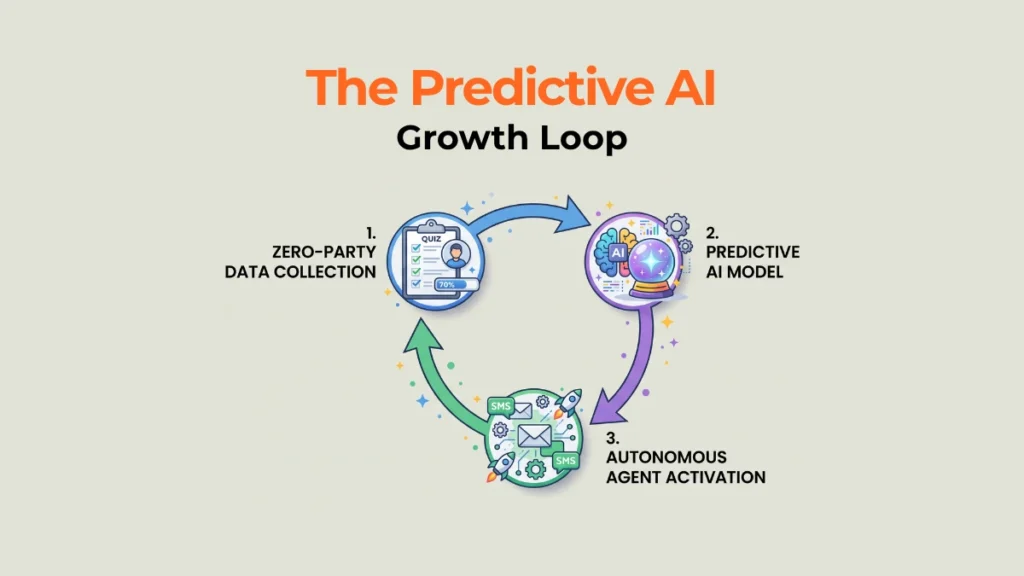
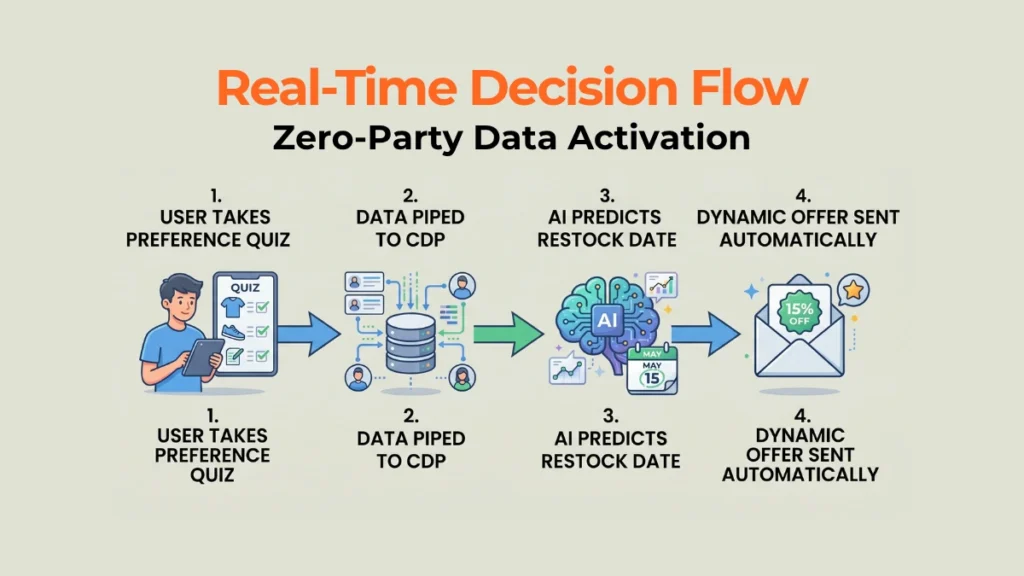
Collect Zero-Party Data: Implement interactive, frictionless methods for data collection. Use dynamic "Find Your Fit" quizzes or conversational SMS flows to ask users explicit questions about their preferences, skin type, or goals.
Centralize the Truth: Pipe this collected data directly into your Customer Data Platform (CDP) or unified CRM. Ensure your AI tools are connected to this central hub so they have a baseline of accurate, unified customer profiles.
Activate Autonomous Agents: Set up your AI models to identify "micro-moments." Instead of generic broadcast emails, allow the AI agent to dynamically send a personalized offer exactly three days before it predicts the user will run out of their current supply.
Need Help with Predictive Analytics? BitBop Can Help.
Transforming your data pipeline and activating AI agents is complex. If you’re ready to implement a predictive marketing analytics strategy but lack the time or data science team, the experts at BitBop can help. Our AI-trained marketers can connect your stack, build your zero-party data loops, and launch your strategy fast.
Frequently Asked Questions (FAQ)
What is a predictive marketing analytics strategy?
A predictive marketing analytics strategy uses AI and machine learning to analyze current and historical data, specifically zero-party data, to accurately forecast a customer's future behavior and automate marketing actions accordingly.
How does zero-party data work with AI growth?
Zero-party data is explicit information intentionally shared by a customer. It provides perfectly accurate fuel for AI models, allowing the AI to generate highly personalized, predictive campaigns without relying on privacy-violating third-party cookies.
Can a predictive marketing analytics strategy lower my CAC?
Yes. By predicting exactly who is ready to buy and when, you stop wasting money retargeting users who have no intent. This hyper-efficiency drastically lowers your Customer Acquisition Cost and boosts lifetime value.
Tips
- Trade value for data immediately; offer a discount or personalized result in exchange for quiz completions.
- Start with predicting just one outcome (e.g., the 30-day restock date) before building complex cross-selling models.
- Audit your data pipelines monthly to ensure quiz answers are accurately tagging user profiles in your CRM.
Warnings
- Do not ask for more data than you plan to immediately use; long surveys create severe friction.
- Siloed data will break the AI model; ensure your collection tools natively integrate with your CDP.
- Avoid "creepy" messaging; state clearly why you are recommending a product based on what they explicitly told you.
Things You’ll Need
- A Zero-Party Data collection tool (e.g., dynamic quiz software or two-way SMS).
- A centralized Customer Data Platform (CDP) or robust CRM.
- A predictive AI agent or machine learning automation layer.